I’m redesigning the website for a fence contractor, and I’m adding three things to it that most contractors don’t have.
Most contractor websites follow the same formula. A homepage, a list of services, a list of service areas, and a contact form.
There’s nothing wrong with that. Those pages matter.
But that formula leaves out a lot of what a homeowner actually wants to know before they pick up the phone. Who am I going to be dealing with? What happens after I reach out? Is this company part of the community?
Here are the three things I’m adding, and why.
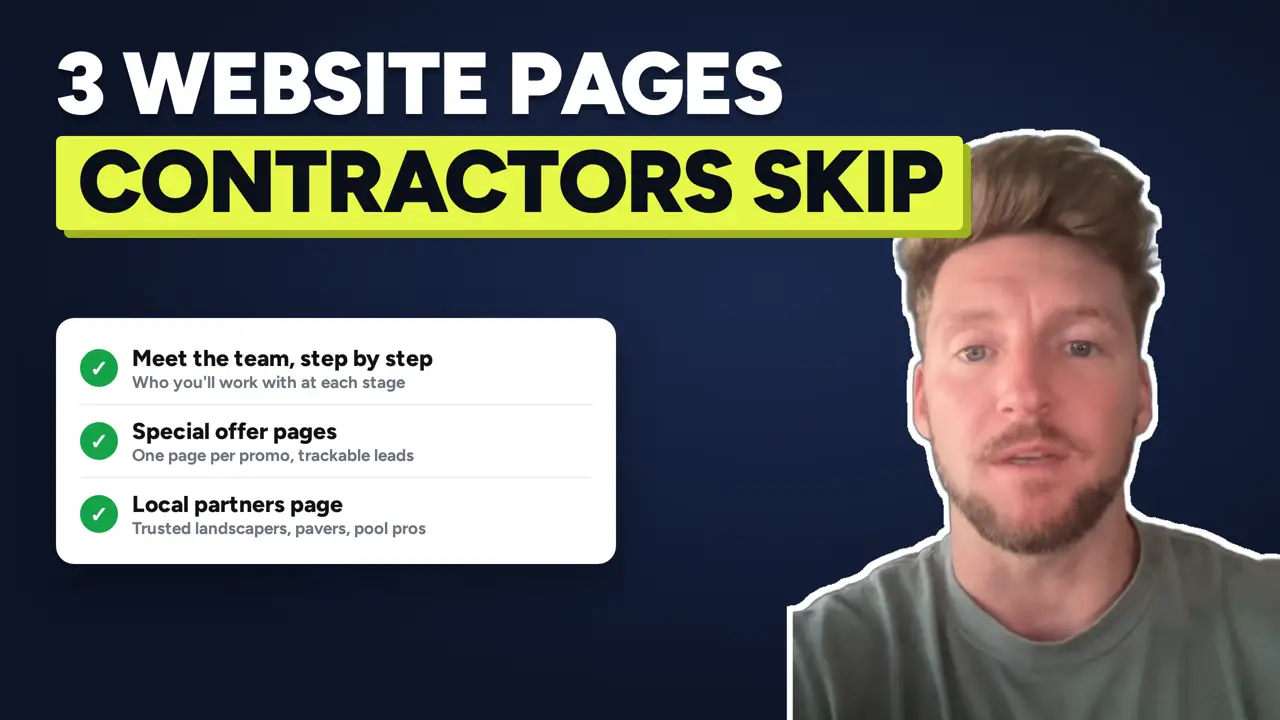
1. A “Meet Your Team” Page That Shows the Process, Not Just Headshots
Most “Our Team” pages are a grid of headshots with a name and a job title under each one.
That’s fine, but it doesn’t tell a potential customer much. A title like “Project Coordinator” doesn’t explain what that person will actually do for you.
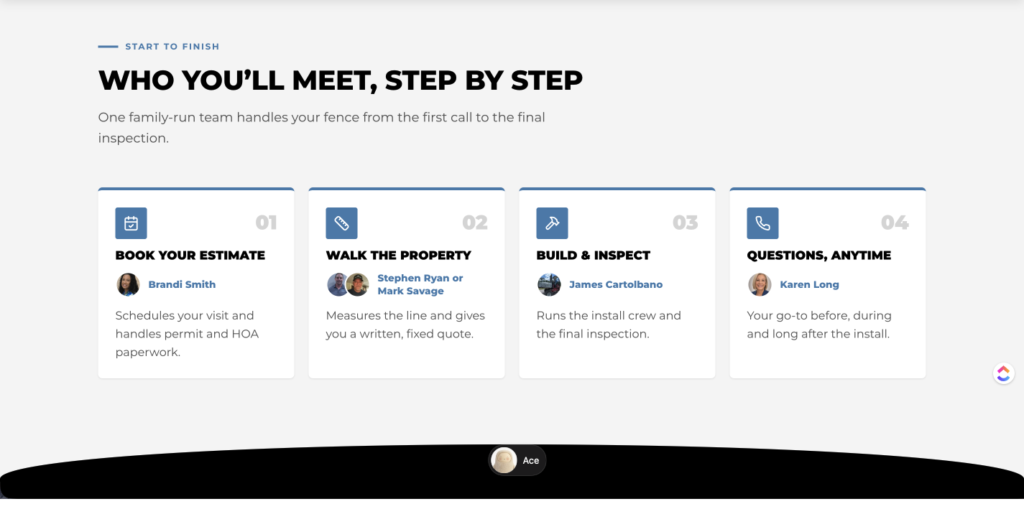
So instead of only showing headshots and bios, we’re showing the entire process and who the customer will work with at each step:
- Book your estimate with Brandy
- Walk the property with Steven or Mark
- Build and inspect with James
- Questions along the way? Karen is your go-to
Now, before someone even calls, they can see who the company’s people are and what the process looks like from start to finish.
Why this matters
Hiring a contractor means letting people onto your property and trusting them with a big purchase. Homeowners want to know what to expect.
Showing the process answers questions people often hesitate to ask:
- What happens after I request an estimate?
- Will someone actually come out and look at my yard?
- Who builds it, and does anyone check the work?
- Who do I call if something comes up?
It also makes the company feel like real people instead of a logo. When Brandy picks up the phone, the customer already knows her name.
What you need for this page
- Real photos of your team (not stock photos)
- Your process broken into clear steps
- The name and role of the person responsible for each step
- A clear way to start step one, usually a button to request an estimate
2. Dedicated Pages for Each Special Offer or Promotion
A lot of contractors put their deals in one section on the homepage. A seasonal discount, financing, a military or first responder discount, all stacked into one block.
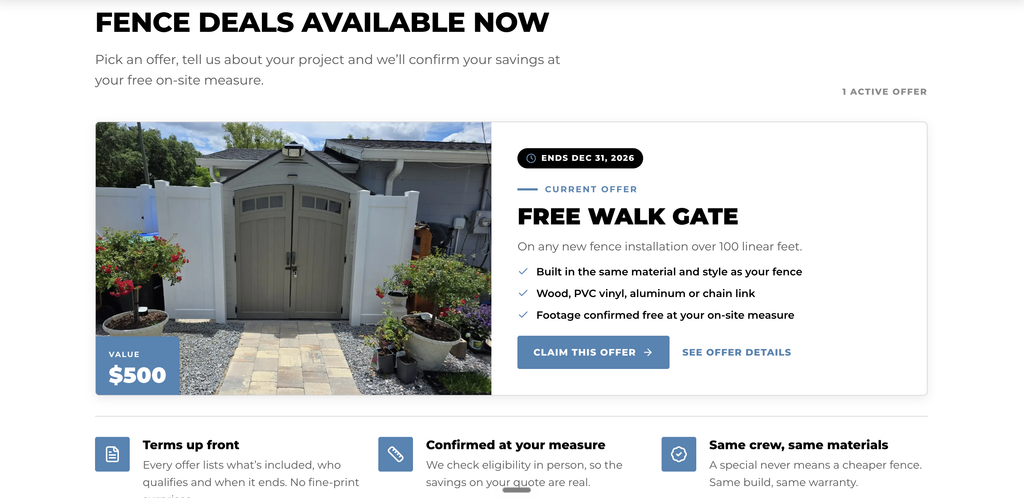
For this redesign, I’m building a dedicated page for each special offer or promotion, including ones the company isn’t running yet but plans to in the future.
Each page has more detail about the offer and its own way to get in touch.
Why this matters
More room to explain the offer. A homepage banner can say “10% off for veterans.” A dedicated page can explain who qualifies, which services it applies to, how to claim it, and any fine print.
You can actually track which promotions bring in leads. This is the big one. When every offer goes to the same homepage and the same contact form, it’s hard to know whether a lead came from the promotion or from somewhere else.
When each promotion has its own page with its own form, you can see exactly how many leads each one generates. That makes it much easier to decide which offers are worth running again.
They’re easy to link to. If you run an ad, send an email, or post about a specific promotion on social media, you can send people straight to the page about that offer instead of making them hunt for it on your homepage.
What you need for each promotion page
- A clear headline stating the offer
- Who qualifies and what it applies to
- How long it runs, if it has an end date
- A form or call button so leads can be tracked back to that page
3. A Local Partners Page
The third thing is a local partners page.
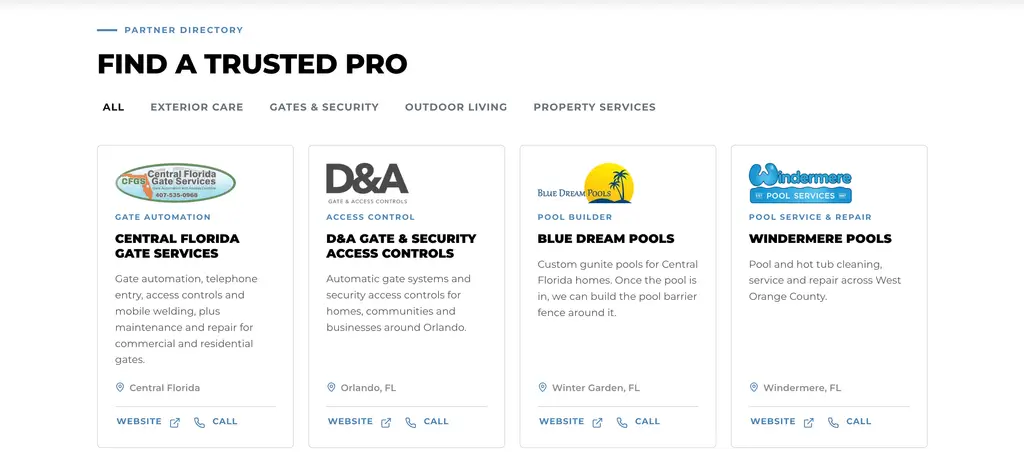
Someone getting a new fence might also need a landscaper, a paver company, or someone to maintain their pool. So we’re going to highlight other local businesses the fence company trusts and recommends.
Why this matters
It’s genuinely useful. A fence is often part of a bigger outdoor project. Pointing customers to businesses you trust saves them time and makes you a helpful resource, not just a vendor.
It shows you’re part of the community. Homeowners want to hire local companies. A list of other local businesses you work alongside reinforces that you’re established in the area.
It builds relationships with other businesses. Landscapers, pool companies, and paver installers talk to the same homeowners you want to reach. When you recommend them, they’re more likely to think of you when one of their customers needs a fence.
One note: I’d only list businesses the company would actually recommend to a customer. The point of the page is to help people, not to swap links with as many businesses as possible.
What you need for this page
- A short list of businesses you’d confidently recommend
- What each business does and the areas it serves
- A link to each business’s website
- A sentence about why you recommend them
What Your Website Should Actually Do
A contractor’s website shouldn’t just list services, service areas, and a contact form.
It should:
- Build trust with people who have never heard of you
- Answer their questions before they have to call and ask
- Make it easier for someone to become a customer
The three pages above all do that in different ways. The team page shows who you are and how you work. The promotion pages give people a reason to reach out and show you which offers work. The partners page shows you’re part of the community and makes you more useful to your customers.
None of these pages are complicated to build. Most contractors just don’t think to include them.
If you want a broader look at what else commonly goes wrong on contractor websites, I covered that in I Audited a Contractor’s Website. Here Are 7 Problems I Found.
Want Help With Your Contractor Website?
At DropShadow Agency, I design and build websites for contractors and local service businesses, built to earn trust and turn visitors into estimate requests.
If you want me to take a look at your website, reach out and tell me a little about your business.