
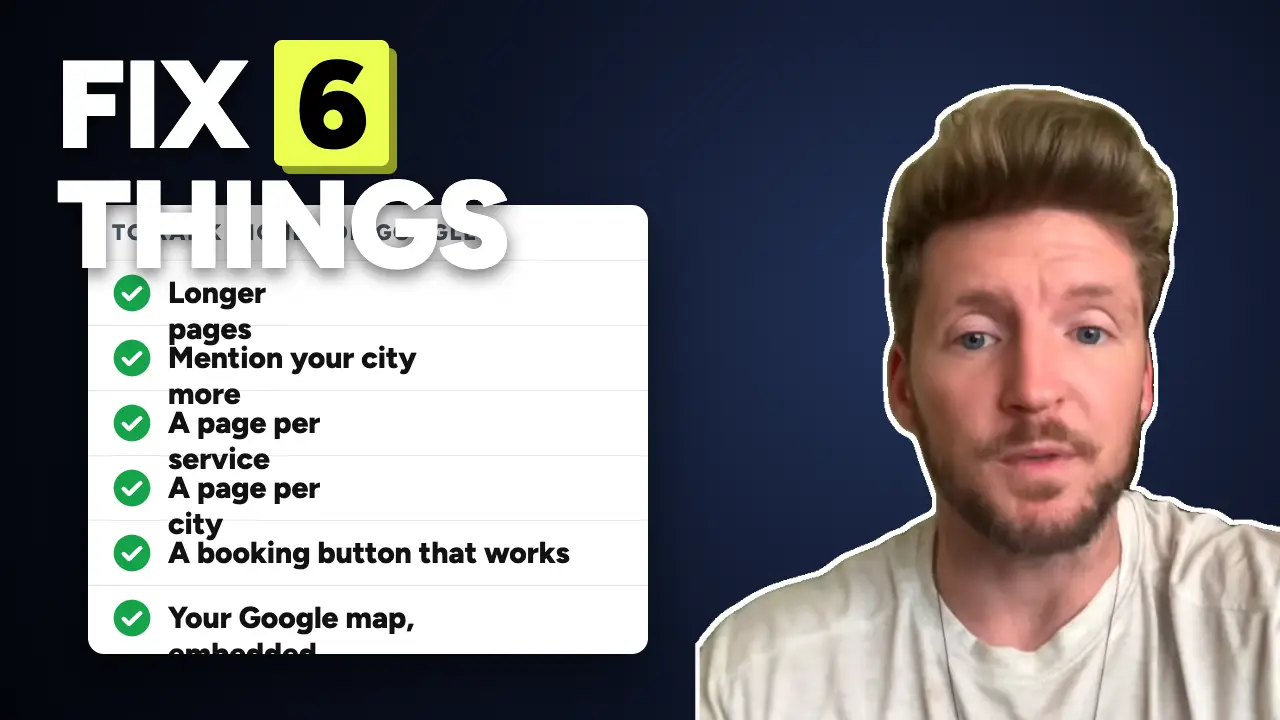
I was reviewing a local business website and noticed several things I’d want to improve before investing heavily in additional SEO content.
The pages were relatively short, the business’s service areas weren’t clearly developed, several services were grouped together, and the online booking button wasn’t working.
There was also an opportunity to make the business’s location information more useful.
None of these issues automatically means a website can’t rank on Google.
But together, they gave me a pretty clear starting point for improving the site.
Here’s what I found and how I’d approach fixing it.
1. The Pages Had 300–400 Words, but the Bigger Question Was What They Were Missing
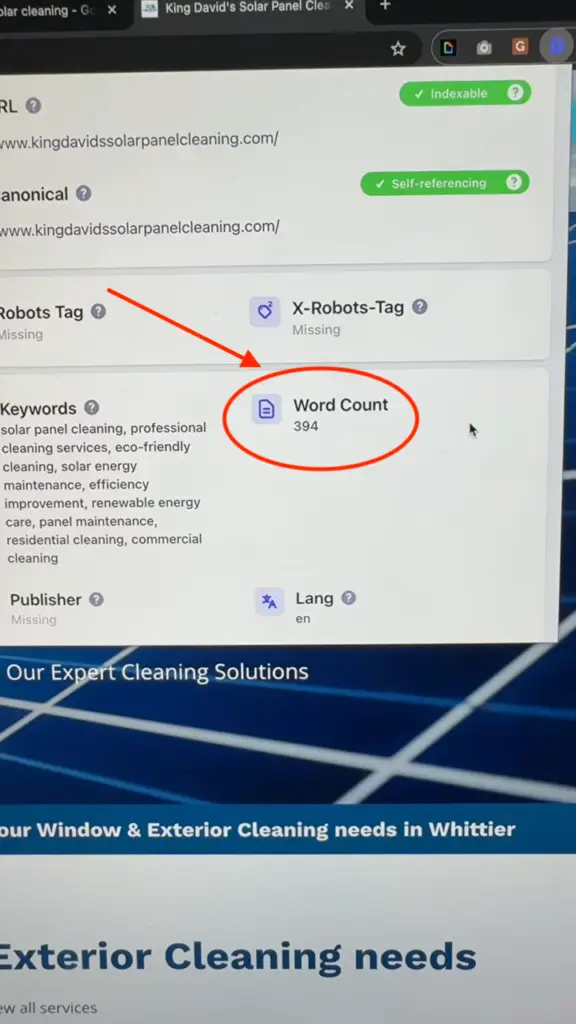
One of the first things I noticed was that several pages contained approximately 300–400 words.
In the original audit, I recommended expanding that content.
But I want to clarify something important.
Google doesn’t require a specific number of words for a page to rank.
A 350-word page can be perfectly useful if it answers the visitor’s questions.
And a 2,000-word page can be nearly worthless if it’s full of repetitive content.
The real question is whether the page gives visitors enough information to make a decision.
What I’d look for on a local service page
Let’s use a plumbing company as an example.
If someone lands on a page about commercial drain cleaning, I’d want the page to explain:
- What types of drain problems the company handles
- Which commercial properties it serves
- What the service involves
- When a customer should request service
- What equipment or methods may be used
- Where the company provides service
- How to request an estimate or appointment
I’d also want to see relevant photos, examples of actual work, and answers to common customer questions when available.
If the page answers those questions in 500 words, great.
If it needs 1,200 words, that’s fine too.
The goal is to make the page more useful, not longer for the sake of being longer.
2. The Website Didn’t Clearly Communicate Its Local Relevance
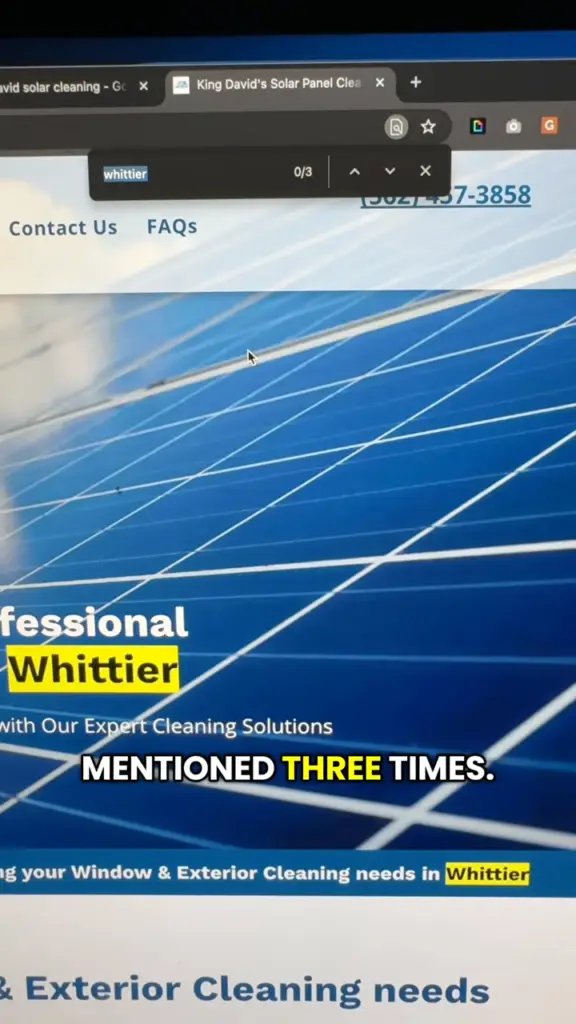
Another thing I noticed was that the business’s location appeared only a few times throughout the content I reviewed.
That’s not automatically an SEO problem.
There’s no rule requiring a city name to appear five, ten, or twenty times on a page.
But local businesses should make it easy for visitors to understand where they operate.
Imagine landing on a service page and having to search around the website to figure out whether the company serves your city.
That’s not a great experience.
What I’d improve
I’d review the homepage and important service pages to make sure they naturally communicate the company’s location and service coverage.
For example, instead of a generic heading like:
“Professional Plumbing Services”
A company serving Orlando might use:
“Commercial Plumbing Services in Orlando, FL”
That heading immediately communicates both the service and the location.
I’d also look at the page title, introductory content, contact information, and relevant internal links.
The business’s location should be clear where it matters.
But I wouldn’t repeat “Orlando, Florida” throughout every paragraph just to increase keyword frequency.
Google recommends using words people search for in descriptive locations such as page titles and main headings.
That’s a much better principle than keyword density.
3. Important Services Didn’t Have Dedicated Pages
Another opportunity involved the website’s service structure.
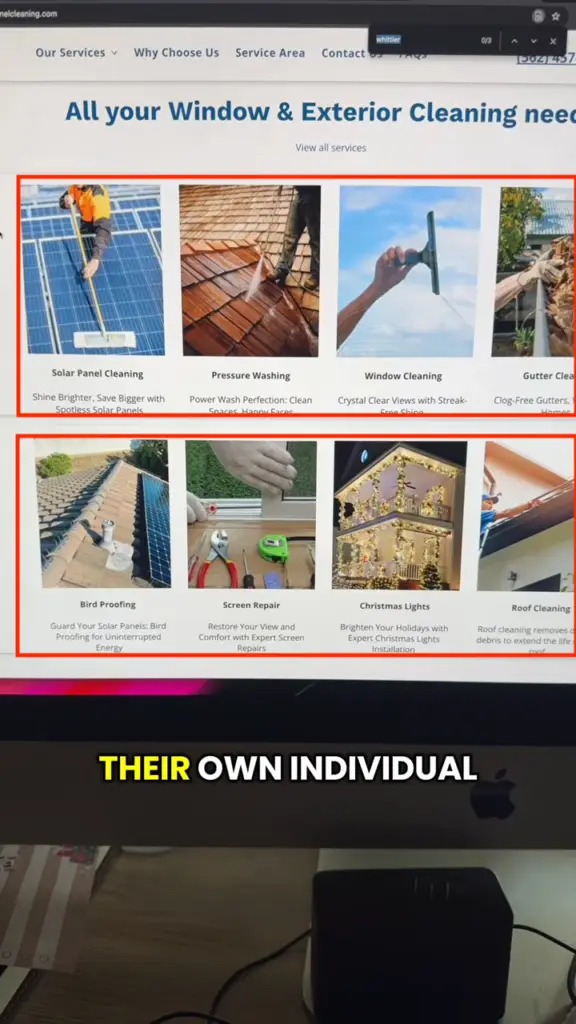
Several services were grouped together rather than having their own dedicated pages.
For some businesses, that’s completely reasonable.
But when services are meaningfully different, dedicated pages can help visitors find the information they need.
They also give search engines a clearer page to associate with a particular service.
An example for a contractor
Imagine a paving company offering:
- Asphalt paving
- Parking lot paving
- Asphalt repair
- Sealcoating
- Parking lot maintenance
Those services overlap, but they aren’t necessarily interchangeable.
Someone looking for parking lot maintenance may have different questions than someone planning a new asphalt installation.
A dedicated service page can address those questions directly.
What I’d include on each page
A useful service page should have a clear title, a description of the service, information about who it’s for, relevant project examples, frequently asked questions, and a prominent next step.
I’d also link to related services where it makes sense.
For example, an asphalt paving page might link to asphalt repair or parking lot maintenance.
That helps visitors navigate the website and gives search engines crawlable connections between relevant pages.
The important distinction is that I wouldn’t create separate pages for every slight keyword variation.
I’d create them for genuinely distinct services and customer needs.
4. The Website Was Missing Opportunities for Location-Specific Content
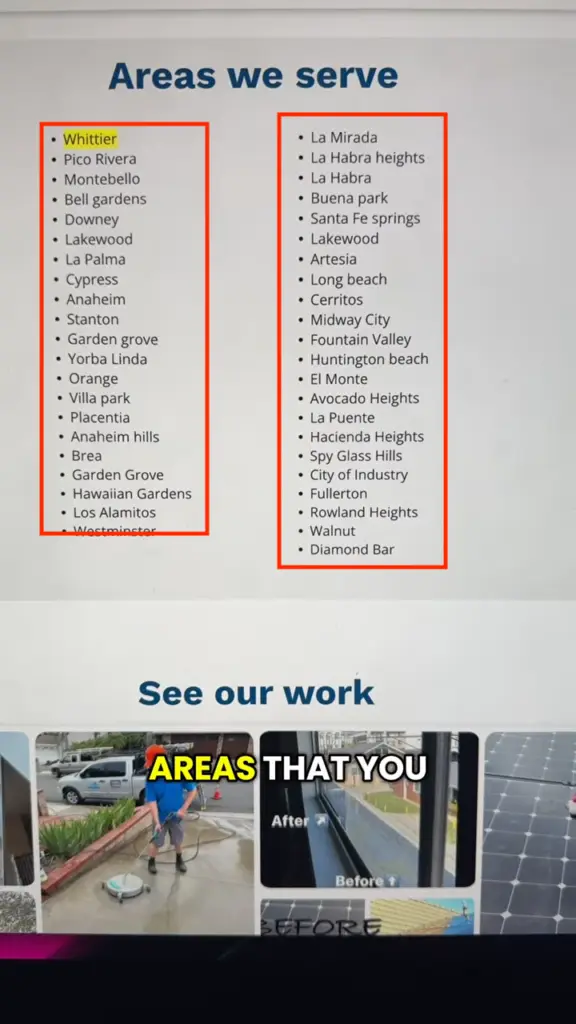
The next recommendation involved the cities and communities the business serves.
Location pages can be useful for local service businesses, especially when they operate across multiple markets.
But this is an area where SEO can go wrong quickly.
I’ve seen websites with dozens of nearly identical pages where the only difference is the city name.
That’s not the approach I’d recommend.
What makes a useful service-area page?
Let’s say a fence contractor serves Orlando, Winter Garden, Clermont, and Windermere.
A dedicated Winter Garden page could be useful if the company genuinely serves that area and can provide meaningful information for those customers.
That might include:
- Services available in Winter Garden
- Photos of completed local projects
- Relevant installation considerations
- Common questions from homeowners in the area
- Links to the specific fence services offered
- A clear way to request an estimate
The page should provide a reason to exist beyond capturing another city keyword.
How I’d prioritize location pages
I would start with the areas where the business already performs work and has evidence of customer demand.
Then I’d evaluate search intent, existing rankings, competition, and the amount of useful information available for each location.
A smaller number of well-developed pages is often a better starting point than launching dozens of nearly identical pages.
5. The Online Booking Button Wasn’t Working
This was probably the most immediately actionable issue I found.
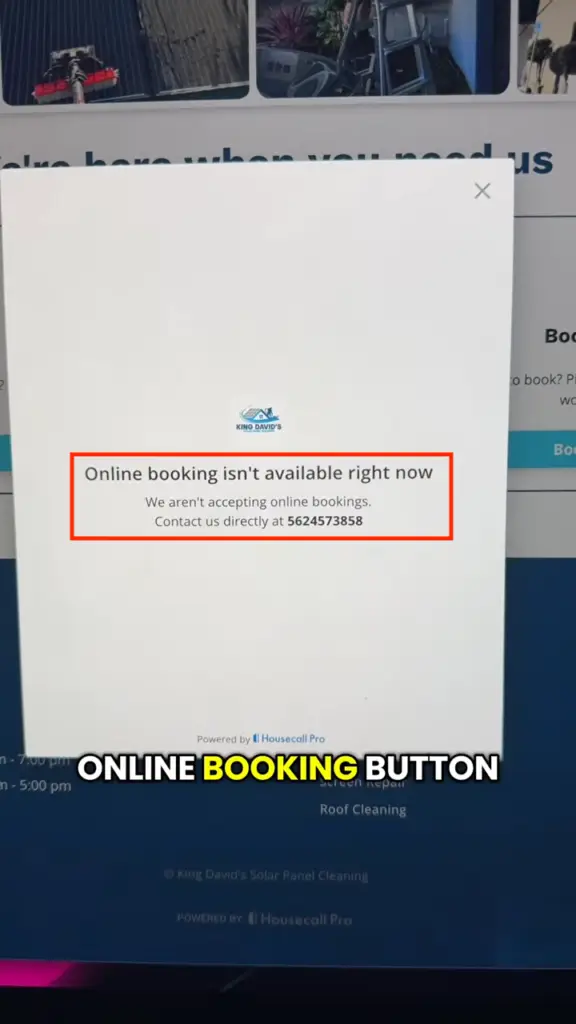
The website had an online booking button, but it wasn’t working during my review.
That matters regardless of how well the website ranks.
Imagine someone searching Google for a service.
They find your website.
They read about what you offer.
They decide to book an appointment.
And the booking button doesn’t work.
The visitor has reached the point where they’re ready to take action, but the website creates an obstacle.
What I’d check
I’d test the entire booking process, not just whether the button responds when clicked.
That includes:
- Does the button open the correct booking page?
- Can the visitor select an appointment?
- Does the booking work on mobile?
- Does the business receive the appointment notification?
- Does the customer receive a confirmation?
- Is the appointment recorded in the intended calendar or CRM?
If the website uses an external scheduling tool, I’d also check that the integration is functioning correctly.
This is one of those issues I’d fix before investing time in new SEO pages.
More visibility is valuable, but the website needs to support the customers who are already trying to book.
What About Embedding a Google Map?
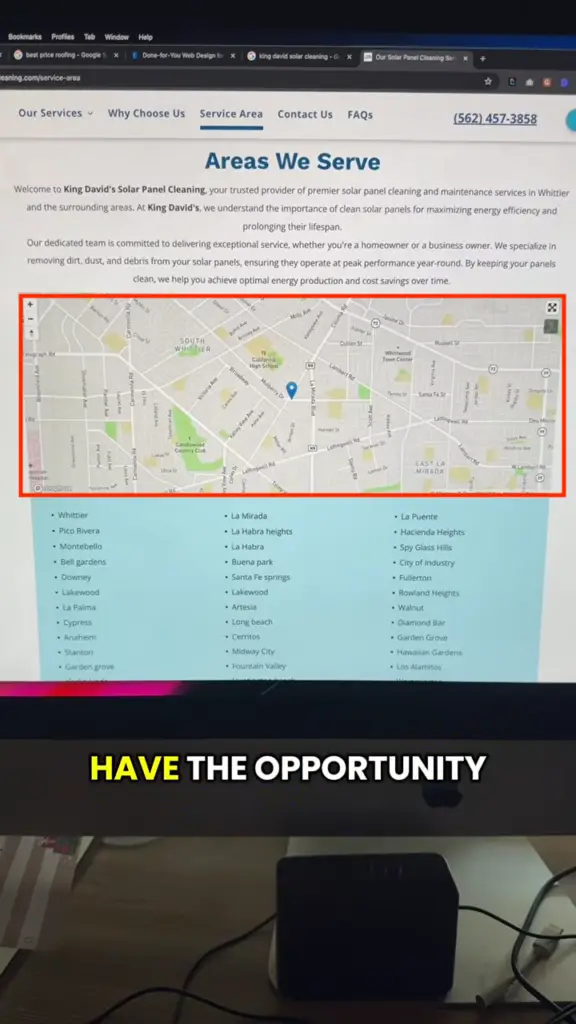
In the original audit, I also demonstrated how to embed a Google Map.
You can do that by opening the location in Google Maps, selecting the share option, choosing the embed option when available, and copying the provided HTML.
But there’s an important distinction.
Embedding a Google Map is not a confirmed direct local ranking factor.
A map can still be useful.
If a business has a legitimate storefront, office, or location that customers visit, an embedded map can make it easier for customers to find that location.
For a service-area business that travels to customers, a map may be less useful than clearly explaining the areas served.
I’d make that decision based on the visitor’s needs, not the assumption that embedding a map will improve rankings.
How I’d Prioritize These Changes
If I were responsible for improving this website, I’d break the work into three phases.
Phase 1: Fix the Booking Experience
I’d start by repairing the booking button and testing the full appointment process.
There’s no reason to leave a broken conversion path in place while working on other improvements.
Phase 2: Improve Existing Pages
Next, I’d review the homepage and existing service content.
I’d focus on answering customer questions, clarifying the services offered, improving page titles and headings, and making the company’s service coverage clear.
I wouldn’t add content just to reach a certain word count.
Phase 3: Expand the Website Strategically
Finally, I’d identify opportunities for dedicated service and location pages.
I’d prioritize pages based on actual business offerings, search intent, and the ability to provide useful, differentiated information.
Then I’d measure what happens.
Google Search Console can help show changes in impressions, clicks, and search queries.
Website analytics and booking data can help show whether visitors are actually taking action.
Neither rankings nor lead volume should be assumed to improve simply because pages were added.
The Bigger Lesson
When I audit local business websites, I’m not looking for a magic SEO checklist.
I’m trying to understand whether the website does three things well.
Does it clearly explain what the business offers?
Does it help the right customers find relevant information?
Does it make it easy for those customers to take the next step?
If the answer to any of those questions is no, there’s probably something worth improving.
And sometimes the most important fix isn’t adding another page or repeating another keyword.
It’s making the website more useful for the people who are already visiting it.
Need Help Improving Your Local SEO?
At DropShadow Agency, I work with local service businesses to improve their websites, Google Business Profiles, and local search visibility.
If you’re unsure whether your website is structured to attract and convert local customers, let’s take a look.